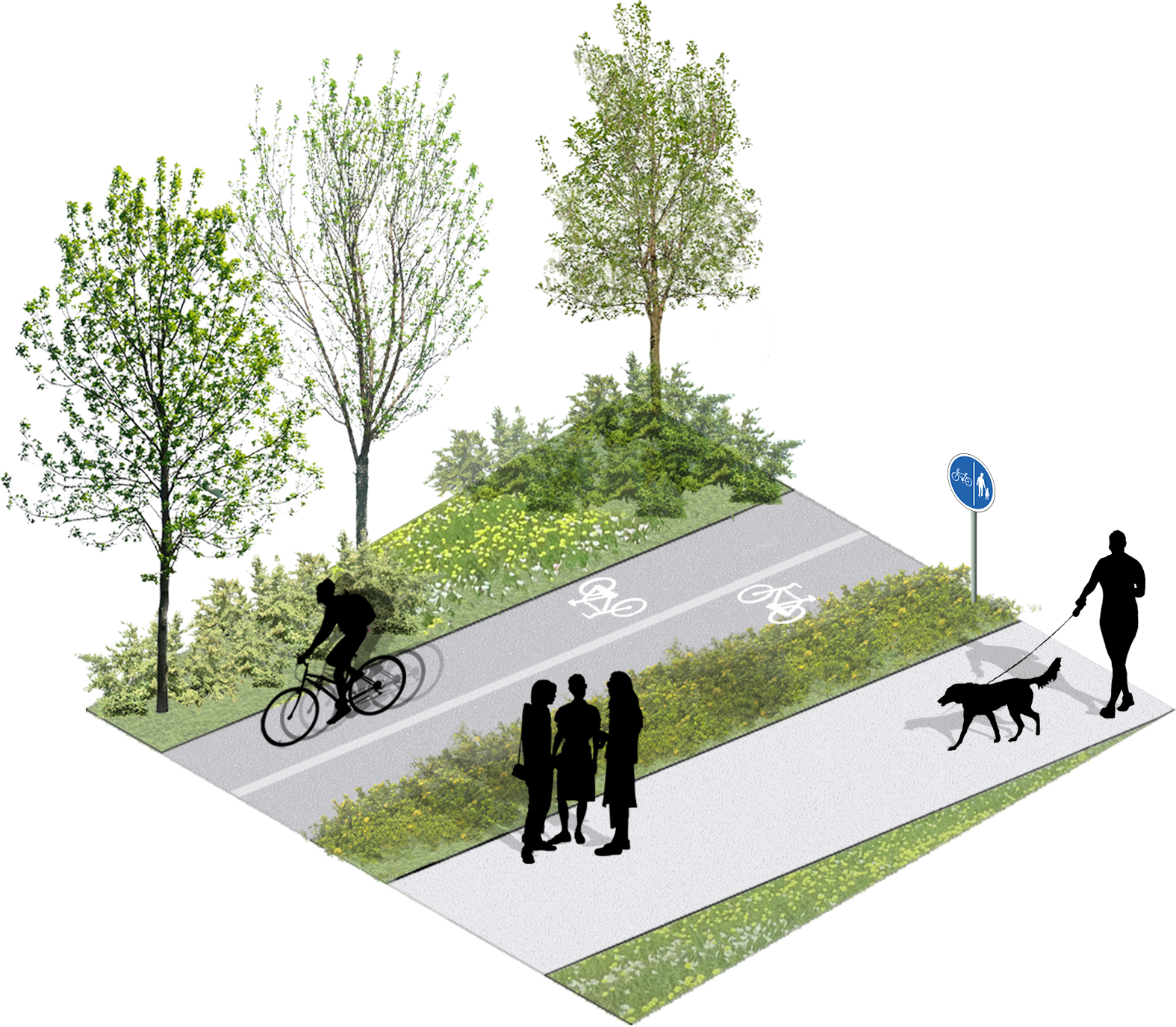
Eco-friendlier
transportation
The main transportation links within Breiðholt are defined in the neighbourhood plan, including links to adjacent city sectors, shopping and services
Parking issues, public transport and city streets with facilities for electric-car charging stations and car sharing were in the focus when working proposals for the Breiðholt neighbourhood plan were presented in the summer of 2020. According to the municipality plan and the traffic and communication agreement between state and local communities in the capital area, work is being done towards improving public transport and pedestrian and bicycle infrastructure in order to make it possible for more people to use eco-friendly modes of transport.
This in concert with the Reykjavik city policy to promote eco-friendly modes of travel, in order to encourage more people to cycle, walk and travel by public transport. The strengthening of neighbourhood services in the city´s areas, in easy walking distance for most residents, can also reduce the strain on the road system and at the same time implement health promotion.
Work is being done with respect to improving public transport and pedestrian and bicycling infrastructure, in order to make it possible for more people to use eco-friendly modes of communication
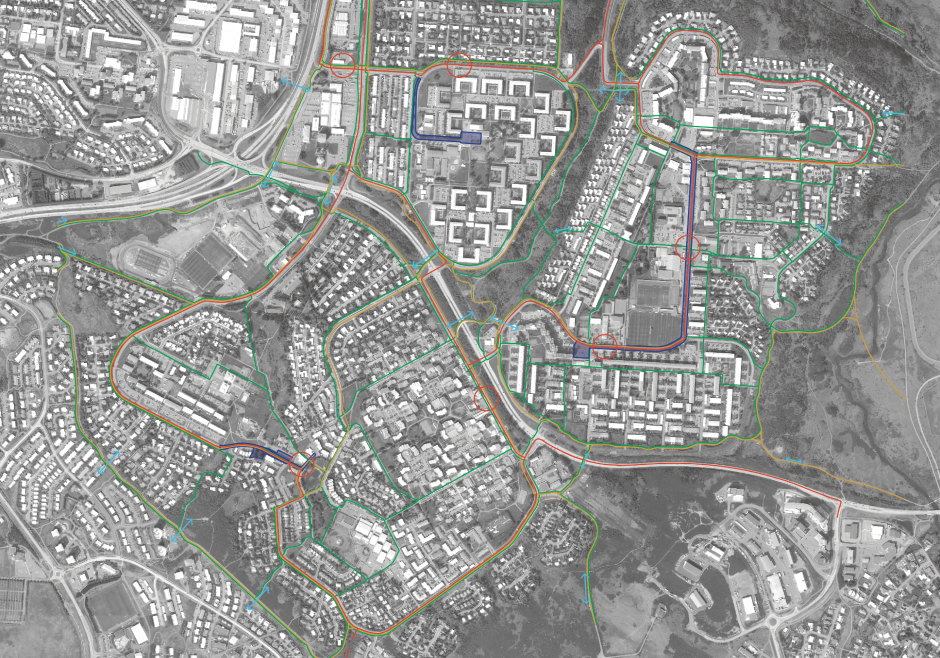

Policy map for transportation
An outline map over the main transportation routes in Breiðholt, both pedestrian and bicycle paths, connections to the city sector, city streets and key stations and routes of public transport.
Map: City of Reykjavík.
Public transport
An emphasis is placed on a good public transport system. Key stations and the routes of the public transport system are shown on the transportation route map of the neighbourhood plan for the city sector, but at the same time it is reiterated that the further implementation of the route system for Strætó bus system is outside the purview of the neighbourhood plan.
Breiðholt, in particular Lower-Breiðholt, has one of the largest bus transit points for Strætó bus system in Mjódd.
Significant changes will be made through a special zoning plan outside of the neighbourhood plan.
These will i.a. include improvements to the surrounding environment of the transit point where it is also a plan for a transit station for Borgarlína-City Line in the future, on the way up through Lower- and Upper-Breiðholt.
At the same time a decision has been made, following comments made during the neighbourhood plan consultation process in the summer of 2020, to look into building a multi-storey car park in Mjódd in connection with a City Line link to Upper-Breiðholt. The car park will be specifically intended for people who work and attend school in Breiðholt.
The Höfðabakki and Hólar intersection will furthermore be specifically looked at in connection with the design of the Borgarlína-City Line route in the area. An idea for a public transport route from Jaðarsel in Seljahverfi over into Kópavogur will be considered with Strætó.
The building of a multi-storey car park in Mjódd will be looked into, in connection with a City Line link to Upper-Breiðholt. The car park will be specifically intended for people who work and attend school in Breiðholt
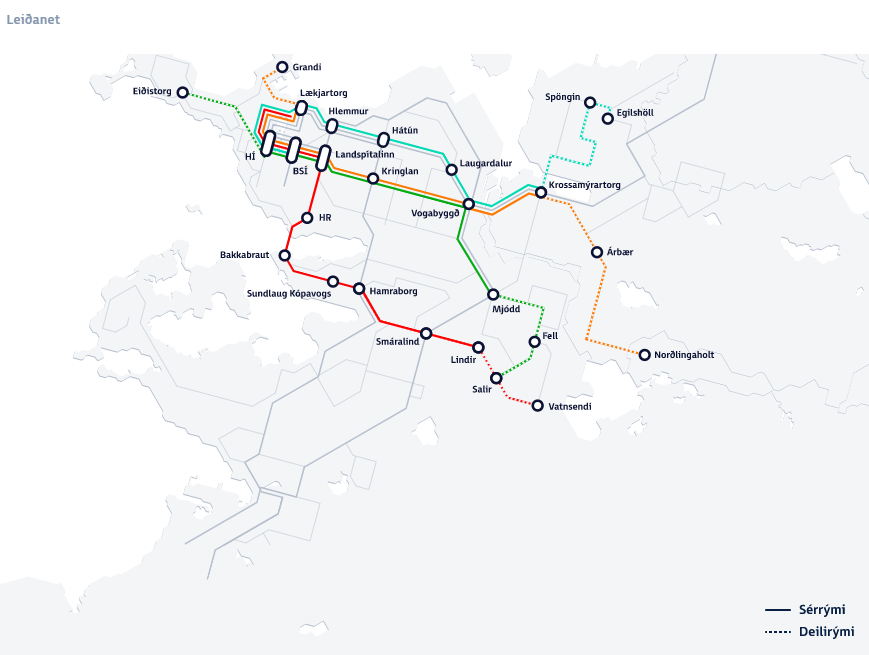
Borgarlína-City Line in Breiðholt 2029
The development of the City Line is a long-term project and the number of City Line routes will be increased steadily over the period of duration of the communication agreement for the capital area.
According to the plans, the connection with Breiðholt will become a reality in 2029.
Map: borgarlinan.is
Urban roads are key roads
Urban roads are key roads within each area, not least taking into consideration links to the main shopping and service areas within the area and connections with other areas.
The word city road in the neigbourhood plan refers to a road space where houses, road and open spaces form a unity but the conditions can however vary greatly from area to area. City roads shall enjoy priority with respect to the redesign and beautification of areas. The emphasis is placed on making eco-friendly modes of travel a prominent feature at city roads and that the access of all is ensured, irrespective of their mobility.
There are frequently neighbourhood centres at city roads with a variety of neighbourhood services and a public square and public spaces are commonly designed in connection with city roads. Time limited activities, such as food-carts and/or town square market will be permitted on the city roads.
Charging stations, car-sharing and neighbourhood stations
A variety of infrastructure will be developed at city roads that may support eco-friendly modes of travel. Waste disposal stations with underground containers will be placed at city roads, close to area centres, so that they will be located in a comfortable walking distance and in areas that people frequent. There will also be an emphasis on placing charging stations and parking spaces for car-sharing at the city roads.
Emphasis is placed on making eco-friendly modes of travel a prominent feature at city roads and that access of all is ensured, irrespective of their mobility

Lower-Breiðholt: Arnarbakki, between the area centre and Álfabakki, will be renovated as a city road. The road will be redesigned for all modes of travel and a new town square at the area centre will be linked to the city road.
Seljahverfi: Rangársel and Hólmasel will be defined and re-designed as city roads. It is assumed that there will be a new central square at Rangársel which will be linked to the planned development of the centre of the neighbourhood. Key stations for public transport in the area are located by the road.
Upper-Breiðholt: Austurberg, between Fellaskóli and Hólabrekkuskóli, including Norðurfell and Suðurhólar will be re-defined as city roads. At the area centre by Eddufell, Hólagarður and Austurberg the plan is to have area town squares that will be linked with the city road. Borgargatan – the City road is also a main thoroughfare for public transport in the area.
City roads
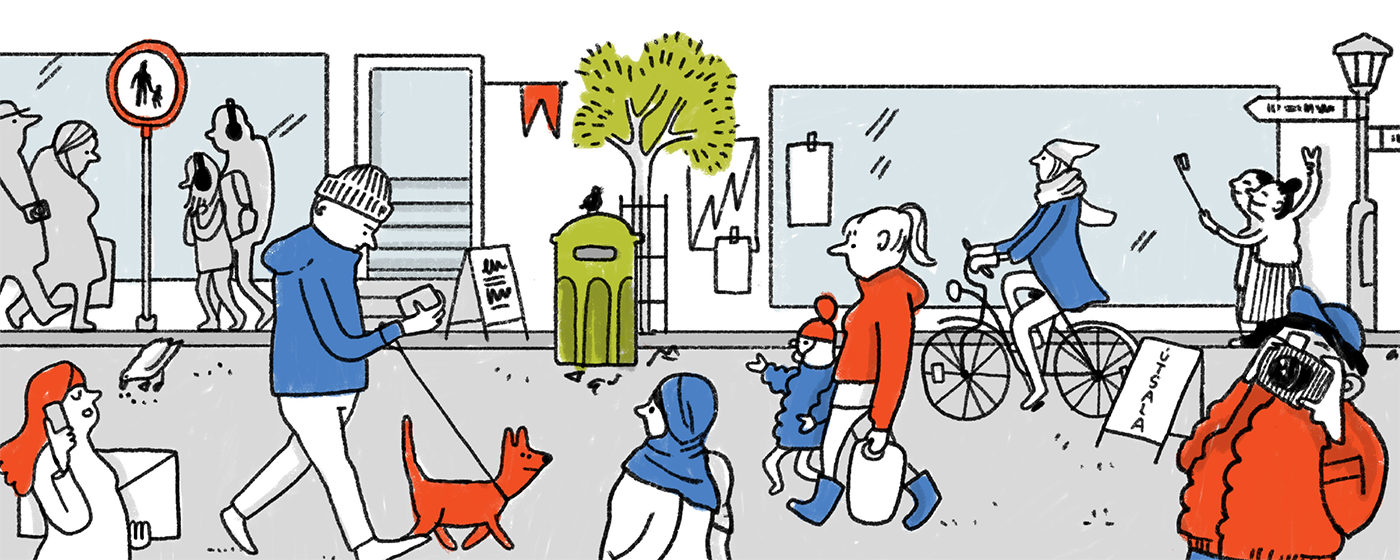
At the city roads there is vibrant human activity and people travel on foot, on bicyle, by car and with public transport.
Illustration: DLD – Dagný Land Design ehf.
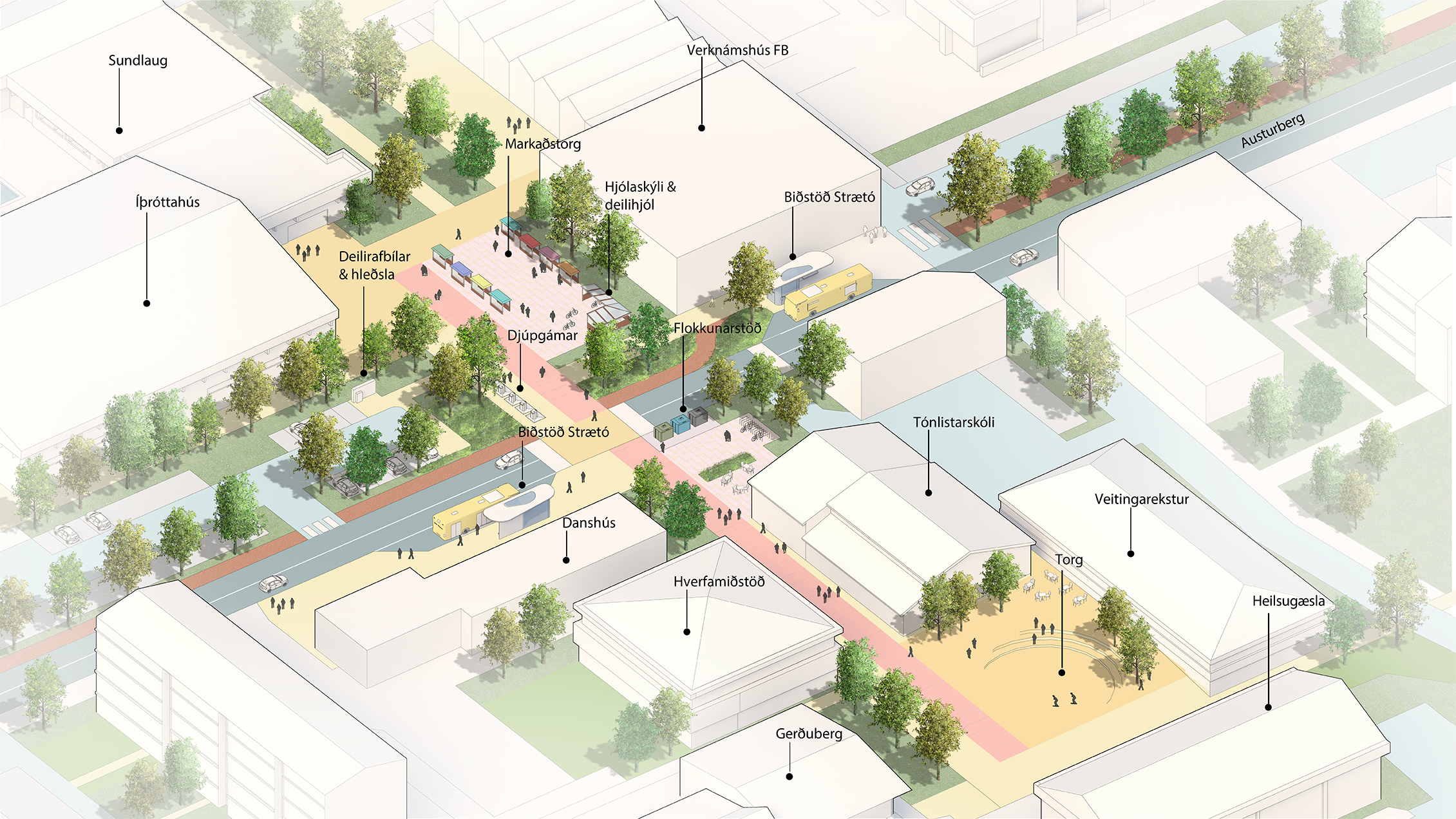
Services for city streets
The illustration shows services that might be developed at Austurberg as a city street, s.a. with sharing farms and cycle rentals, long containers and bus stops.
Illustration: DLD – Dagný Land Design ehf.
Parking spaces
Most of the comments received during the prsentation period in summer of 2020 concerned parking. Most of these revolve around concerns that parking spaces for cars wil be reduced in number by the neighbourhood plan. In tital, there are 12,465 parking spaces permitted in Breiðholt according to the current zoning plan and a count made using aerial photos shows that they are in fact more, or 15,566, excluding parking spaces in Mjódd.
All car parking spaces that are defined in the older zoning plan will be transferred over to the provided permits of the neighbourhood plan. The number of car parking spaces will therefore not be reduced from what it is now.
The goal of the neighbourhood plan is that the number of car parking spaces in the three areas will only slightly increase, despite the development and increase of numbers of flats, so that the ratio of car parking spaces per flat will not be higher than it is now.
Increasing the number of car parking spaces because of additional flats in private family houses is not permitted. When new constructions are built, e.g. in development areas or when allowances for extensions to be built on top of apartment buildings and commercial buildings, are utilised, the current regulations for car and bicycle parking must be observed.
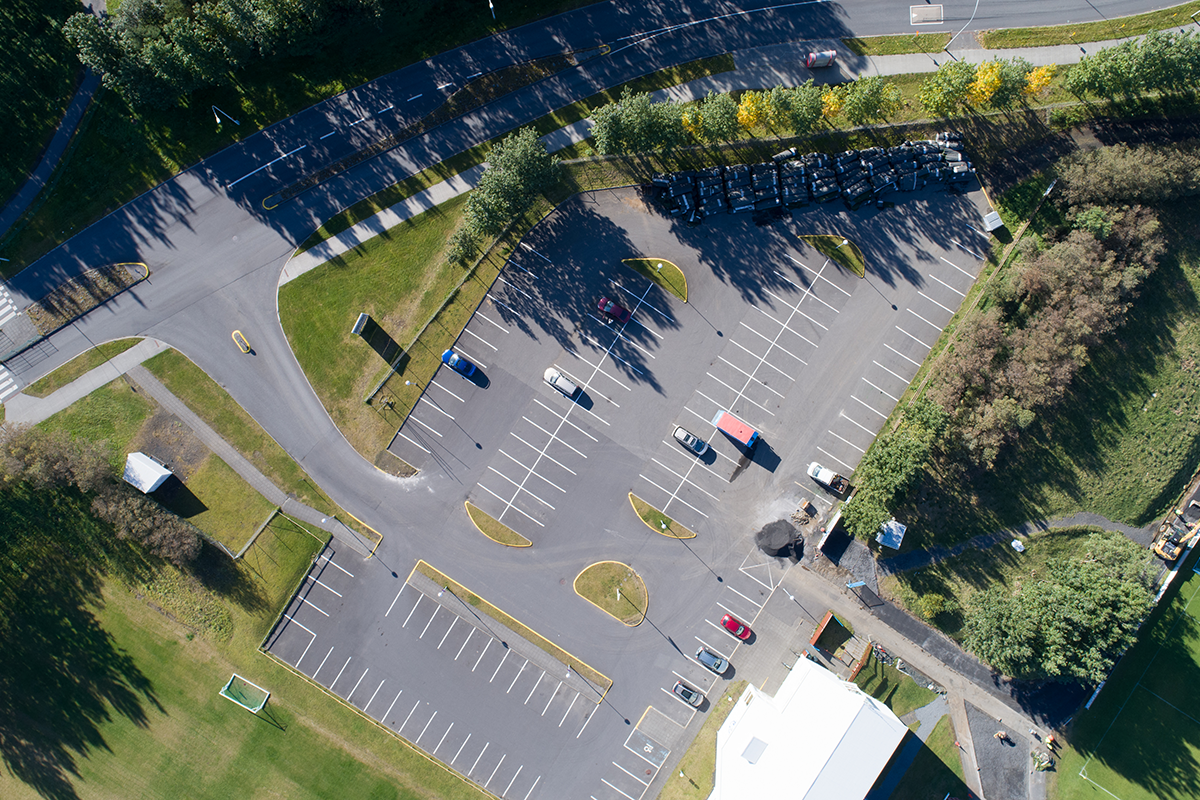
All car parking spaces that are defined in the older zoning plan will be transferred over to the provided permits of the neighbourhood plan. The number of car parking spaces will therefore not be reduced from what it is now
Pedestrian paths and cycling paths
In recent years, the proportion of travels made by bicycle has increased substantially in Reykjavík along with focused development of infrastructure for this mode of travel.
In the neighbourhood plan the location of the main pedestrian paths and bicycle paths appears on the neighbourhood plan drawing and on a transportation guide for each area.
It is for the most part based on the City of Reykjavík bicycle plan with the intent that the paths will be linked with the paths of adjacent areas of the city.
The terms and conditions of the neighbourhood plan also state that at schools, shops and services and other commercial buildings the number and arrangement of bike parking spaces must follow the applicable car and bicycle parking space regulations of Reykjavík.
Thus, there is still a focus on biking as a mode of transportation and ensuring that there are safe and direct routes both within the neighbourhood and between neighbourhoods, city sectors and municipalities.