More diverse neighbourhoods
Neighbourhood planning defines development and build-up in established city areas for the next decades.
The neighborhood plan will facilitate the residents to make changes to their properties so the settled area can develop in concert with changed emphases in society.
In the summer of 2020, working-proposals for a neighbourhood plan for Breiðholt were presented which has been further worked on this past winter. During the designated period for the presentation of working-proposals a significant number of comments and observations were received and a number of items in the proposals have been amended in conformity with such comments but other issues remain with little or no change. Some individual proposals presented in the neighbourhood plan authorising an increase the number of flats within the present settled areas aroused significant discussions and both positive and negative responses.
Plans for a possible increase of flats are for the most part unchanged in the current proposals, as these are to a great extent provisions for owners of single-family houses and apartment buildings to increase the number of flats on their premises.
It is unclear to what extent these rights will be used as they are completely subject to the decisions of the owners of each property. The proposals however are well in line with the approved Reykjavík municipality plan which states that the build-up of the city in the next years will for the most part take place within the present demarcation line for the populated areas and will be in line with the goals of the neighbourhood plan about more sustainable and eco-friendly areas.

Landowners get permission to increase the number of flats on their housing lots but it´s unclear to what extent these permissions will be used as they are subject to the decisions of the owners of each property
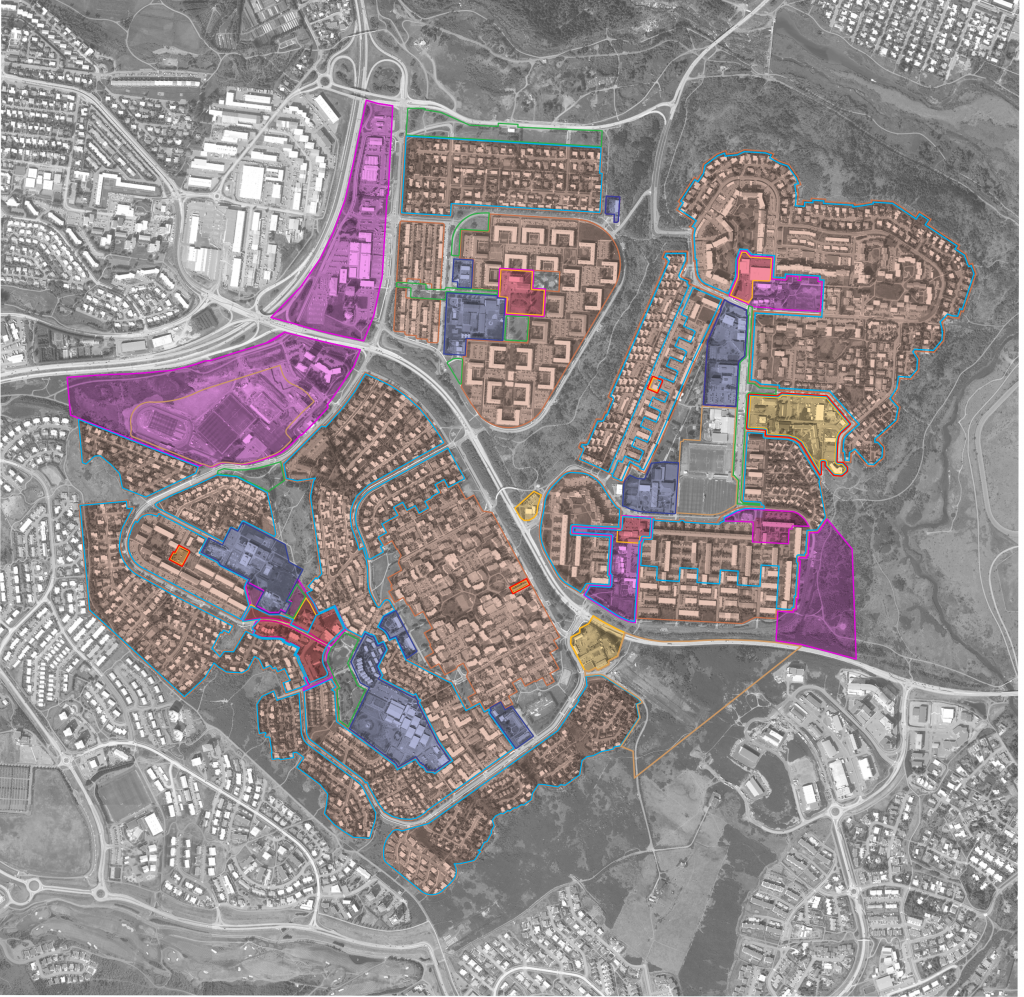
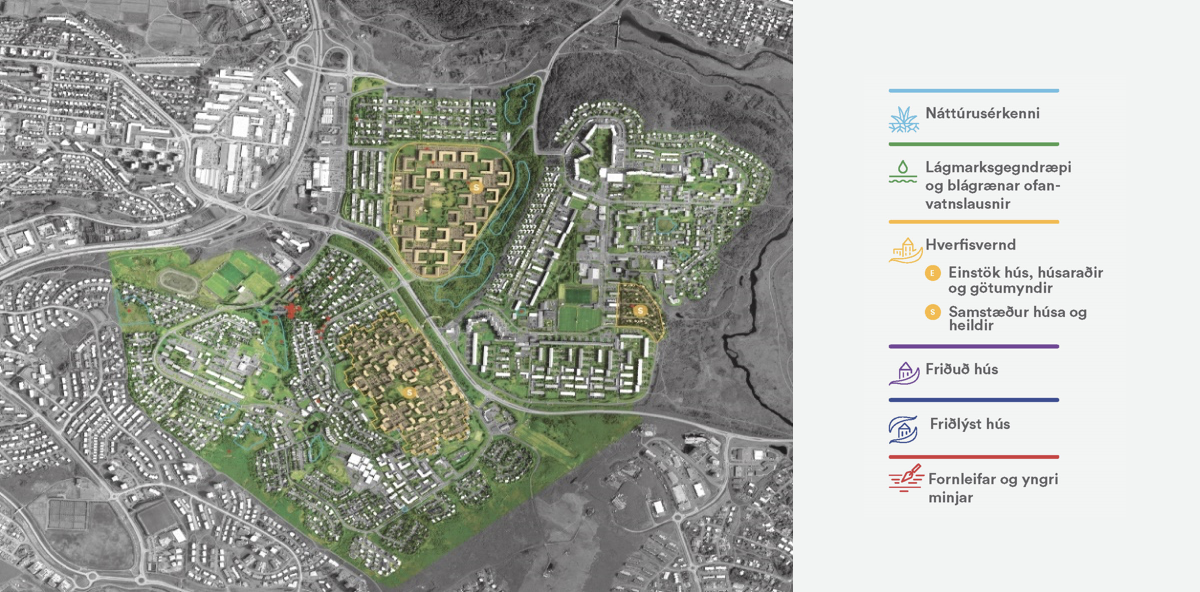
Policy map for the community
The map shows i.a. where it will be permitted to increase the number of flats, special concentration areas and developmental lots according to the proposal for the neighbourhood plan for Breiðholt.
Map: City of Reykjavík.

If holders of building lots in Breiðholt will fully utilise the provisions for permits of the neighbourhood plan, the number of flats would increase by close to three thousand within the limits of the present settled area, either by new constructions or by the construction of building extensions to changes to older housing. The number of flats in Lower-Breiðholt might increase by approx. 250 and by approx. 1,000 in both the Seljahverfi and Upper-Breiðholt areas.
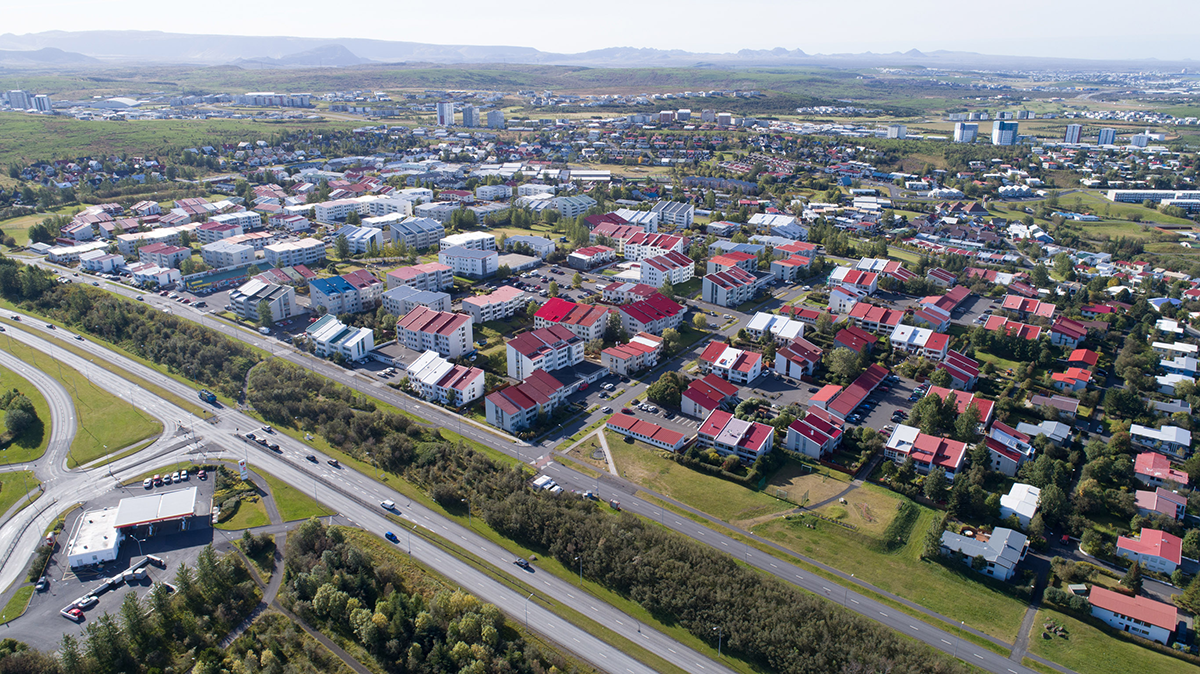
Lower-Breiðholt
According to the provisions for permits in the neighbourhood plan the number of flats within the present settled area of lower Breiðholt may increase by approx. 250.
The working proposals for the neighbourhood plan in the summer of 2020 presented ideas for the build-up of the area centre at Arnarbakki. There are continued plans for removing the present houses and replacing them with new 3-4 floor buildings. On parts of the ground-floors and on the upper floors there will be student flats, both family flats and individual rooms with collective spaces. Owners of private houses in the Stekkir area may partition up to 50 m² additional flats in their houses, or in individual small cottages on the grounds. The provisions of the building code must be met when additional flats are partitioned.
The neighbourhood plan permits approx. 250 new flats in Lower-Breiðholt, variously in new construction or by extensions to and amendments of older housing
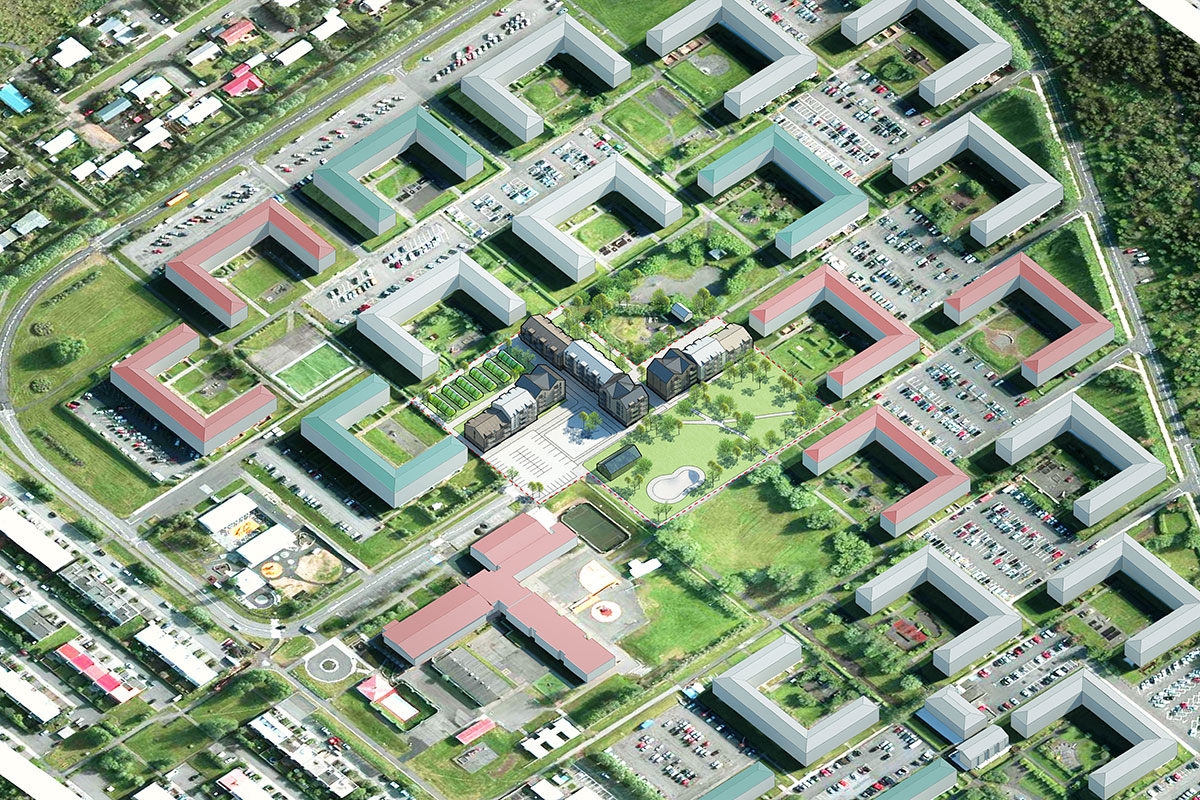
The Bakkar area
Revised proposal 2021 for a build-up of the area centre at Arnarbakki.
Illustration: Basalt architects.
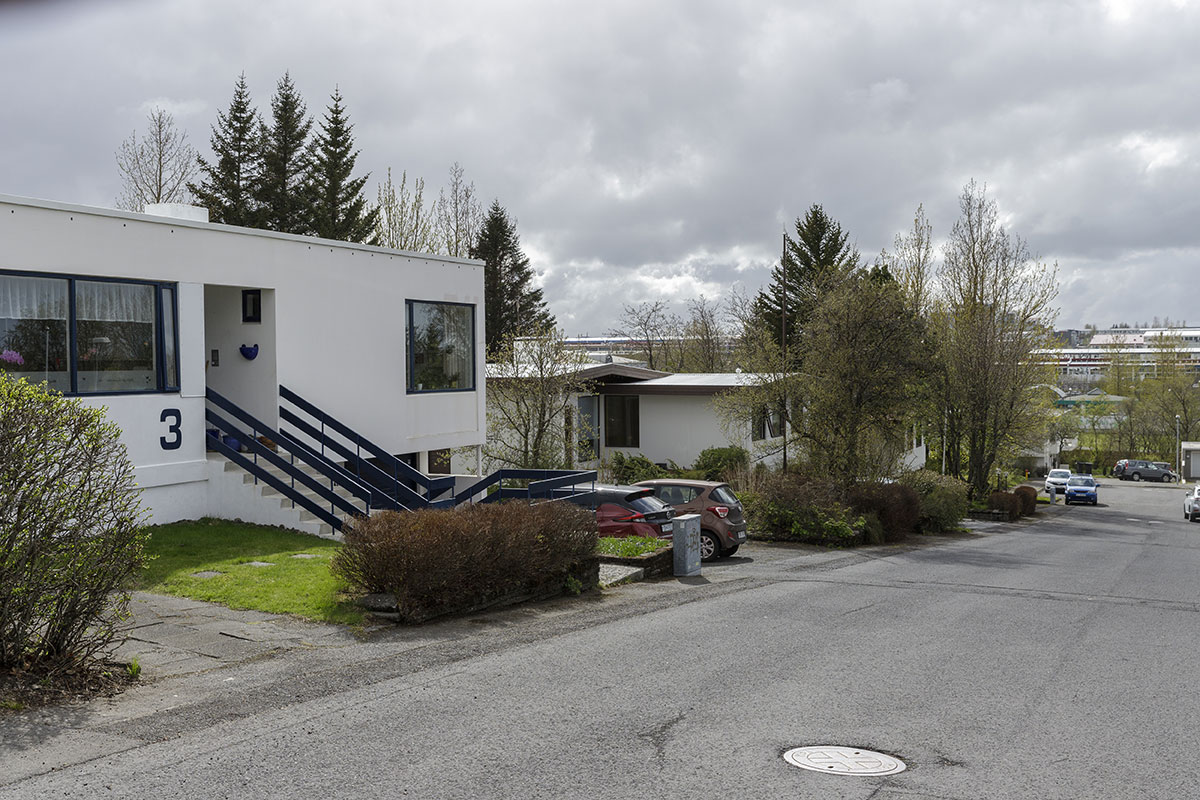
Individual flats
It will be permitted to partition small additional flats in private houses, such as here at Brúnastekkur.
Picture: Bragi Þór Jósefsson.
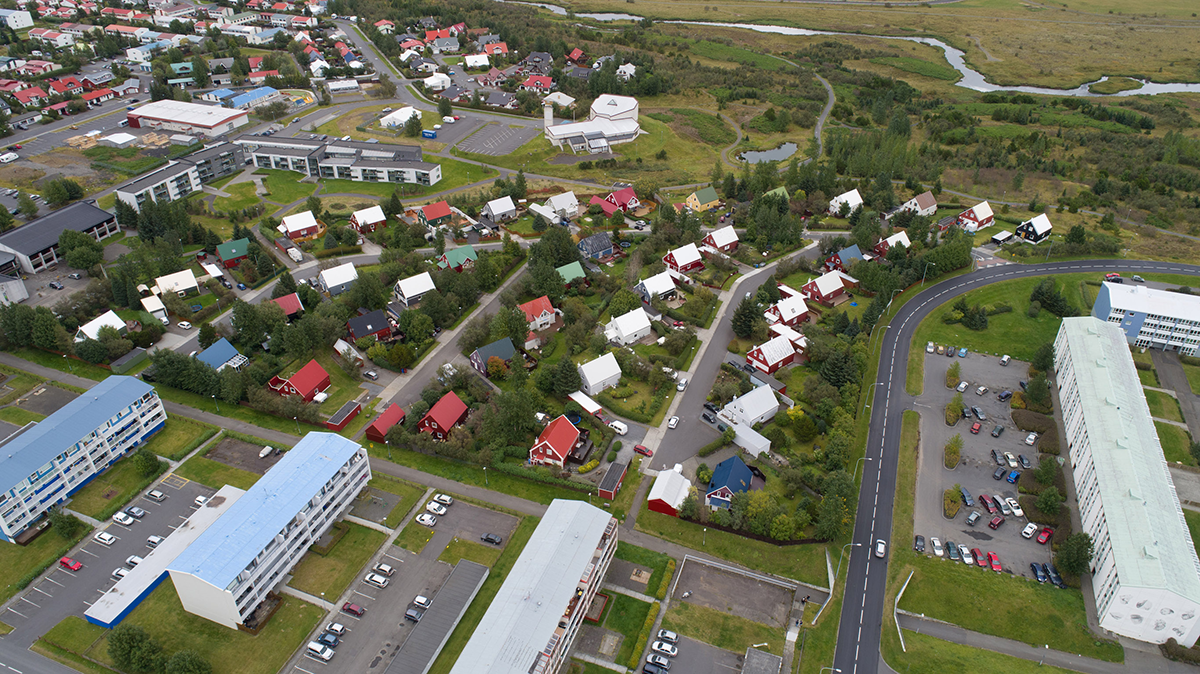
Seljahverfi
The number of flats in Seljahverfi might increase by more than 1,000 with the provisions provided for in the neighbourhood plan.
Permissions will be provided for the furnishing of 50 m² additional flats within larger private houses, in extensions to such houses or in individual small cottages on the grounds. The provisions of the building code must be met when additional flats are furnished. It will also be permitted to add an additional floor to apartment buildings where there is no elevator (except for the apartment buildings at Fálkhóll), provided that at the same time an elevator is installed in the building.
At the same time it will be permitted to build on top of shopping and commercial housing at Tindasel, Rangársel og Hólmasel.
The number of flats in Seljahverfi might increase by more than 1,000 with the provisions provided for in the neighbourhood plan
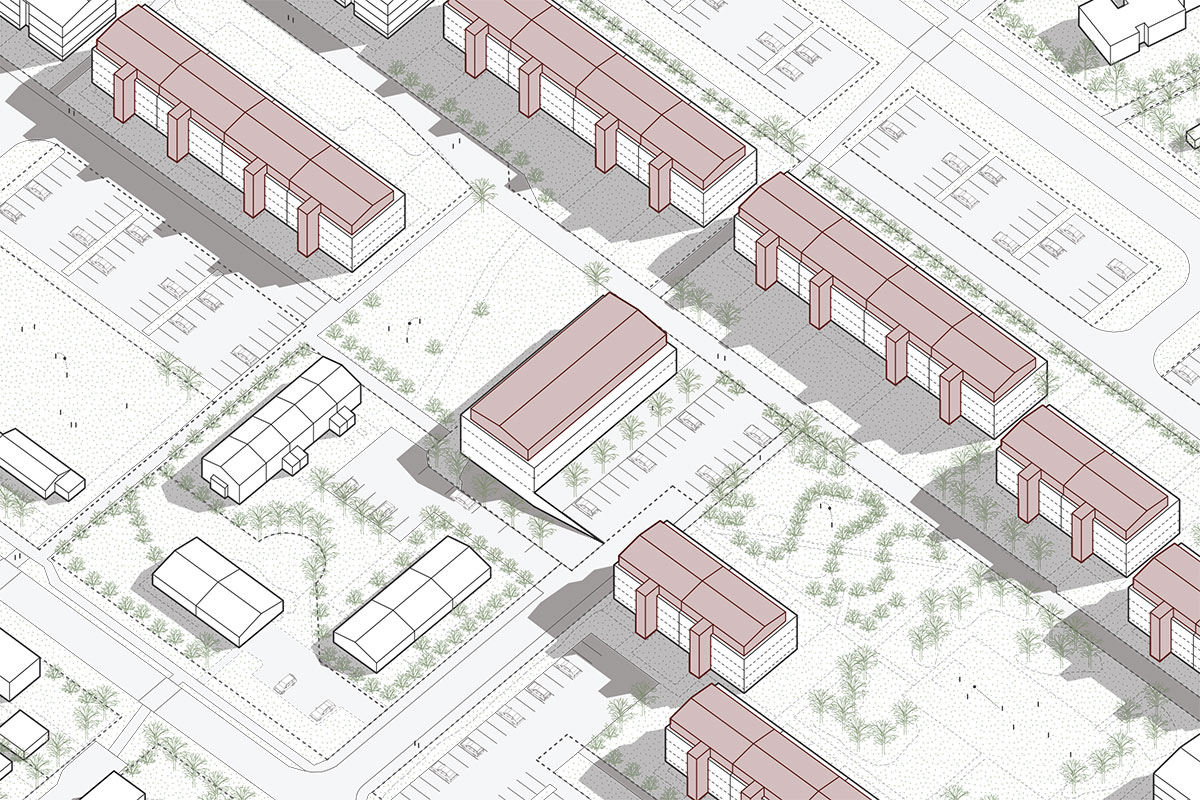
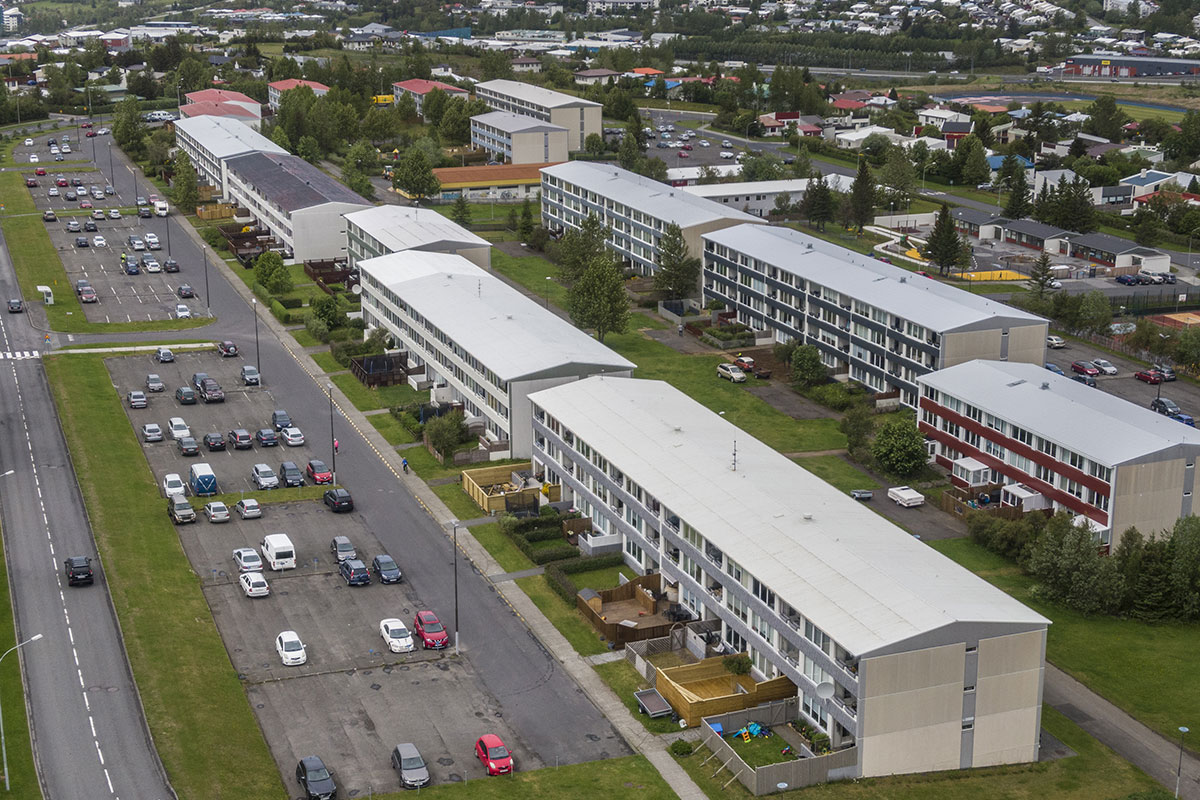
Tindasel
The illustration shows how one might build on top of the shopping and the commercial centre at Tindasel 3
and extensions on top of an apartment building with new flats including elevators in order to improve
access. To the right is the current situation in Tindasel.
Pictures: Trípólí architects and Bragi Þór Jósepsson.
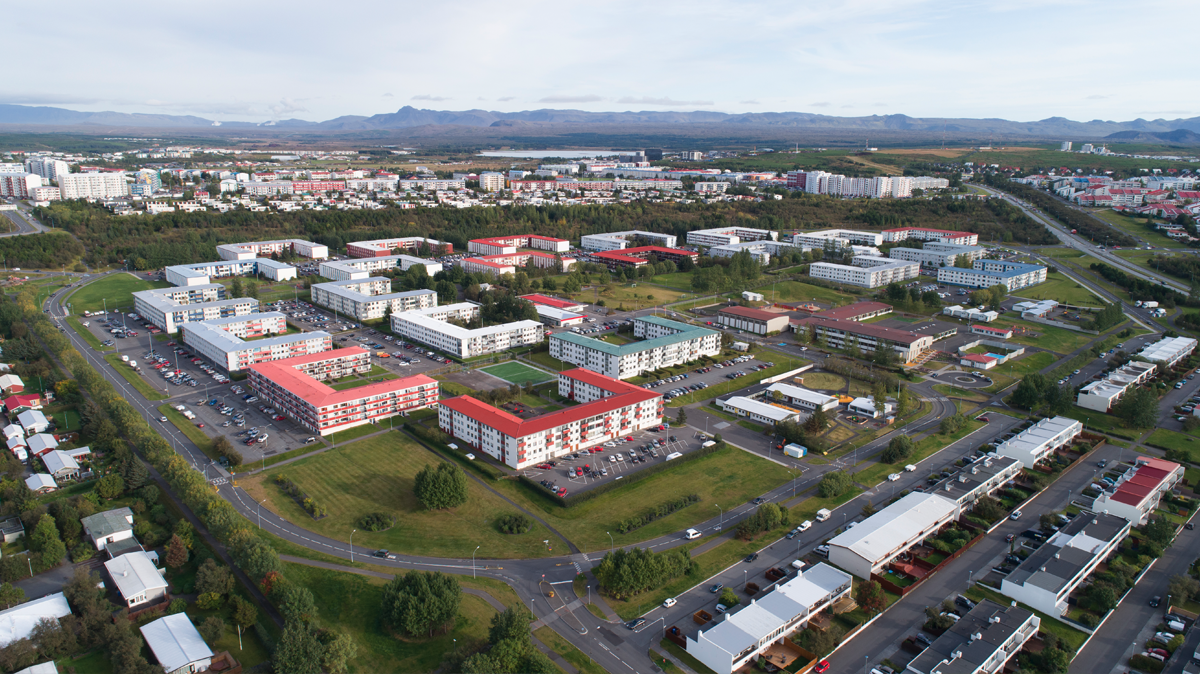
Upper-Breiðholt
In Upper-Breiðholt the number of flats could be increased by more than 1,000 by the introduction of the neighbourhood plan, but the increase will primarily be determined by the degree to which the holders of building lots decide to utilise permissions provided for in the neighbourhood plan.
It will be permitted to furnish small 50 m² additional flats in private houses provided that the flats meet the requirements of the building code. It will also be permitted to build an extra floor on top of most apartment buildings where there is no elevator at Hólar, Berg and Fell provided that an elevator is installed at the same time in order to improve access. At the same time it will also be permitted to add an additional floor on top of the commercial building at Vesturberg and additional floors at Hraunberg og Gerðuberg, as well as new construction at the area centre there, are provided for.
Also provided for are new flats, incl. student flats, in apartment buildings, terraced houses and private houses in the development area at Eddufell-Völvufell.
The plan is to increase the number of flats at the development area by Hólagarður-Suðurhólar, both in connection with the shopping centre and in the open area at Suðurhólar. At the same time there is provided for an increase in the number of flats in the development areas at Jórufell-Norðurfell and at Suðurfell, as there will be a special emphasis placed on larger size flats for families in order to respond to comments and observations that were received in response to the working proposals for the neighbourhood plan in the summer of 2020.
The number of flats might increase by more than 1,000 in Upper-Breiðholt according to the neighbourhood plan, but the increase is dependent upon the use of the new provisions by the building lot holders
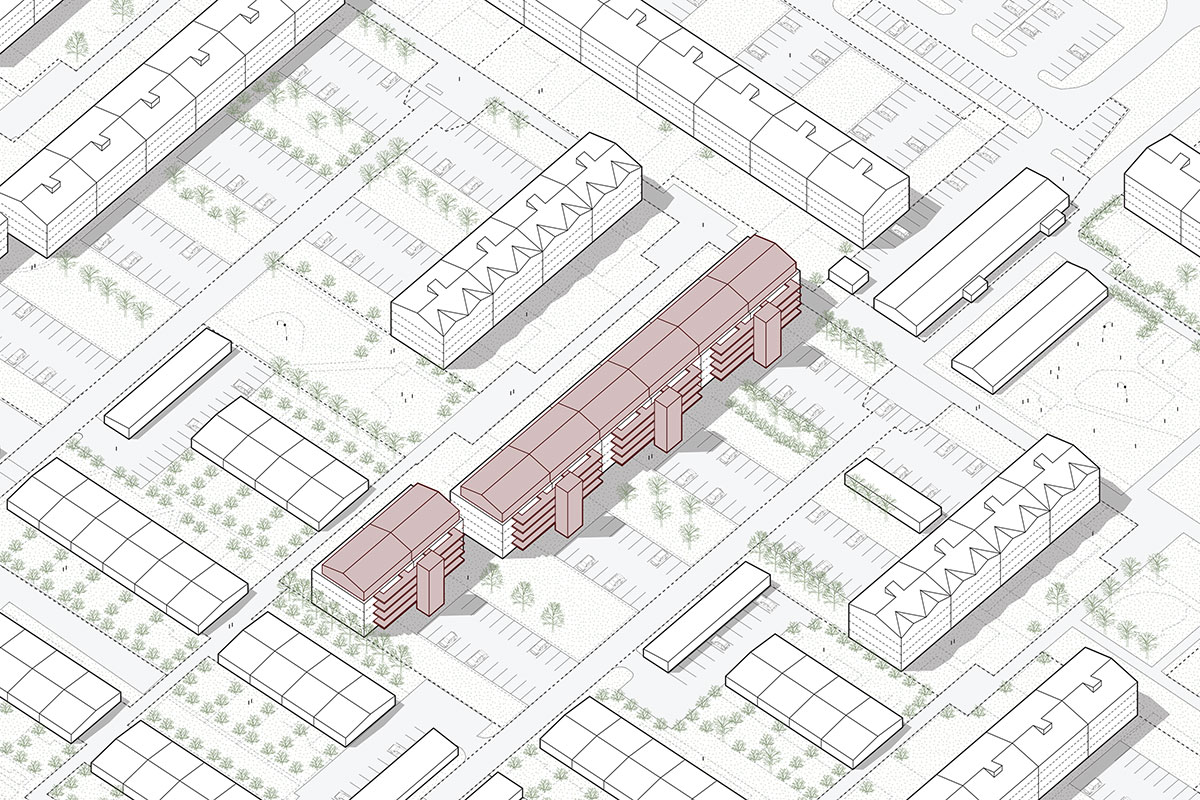
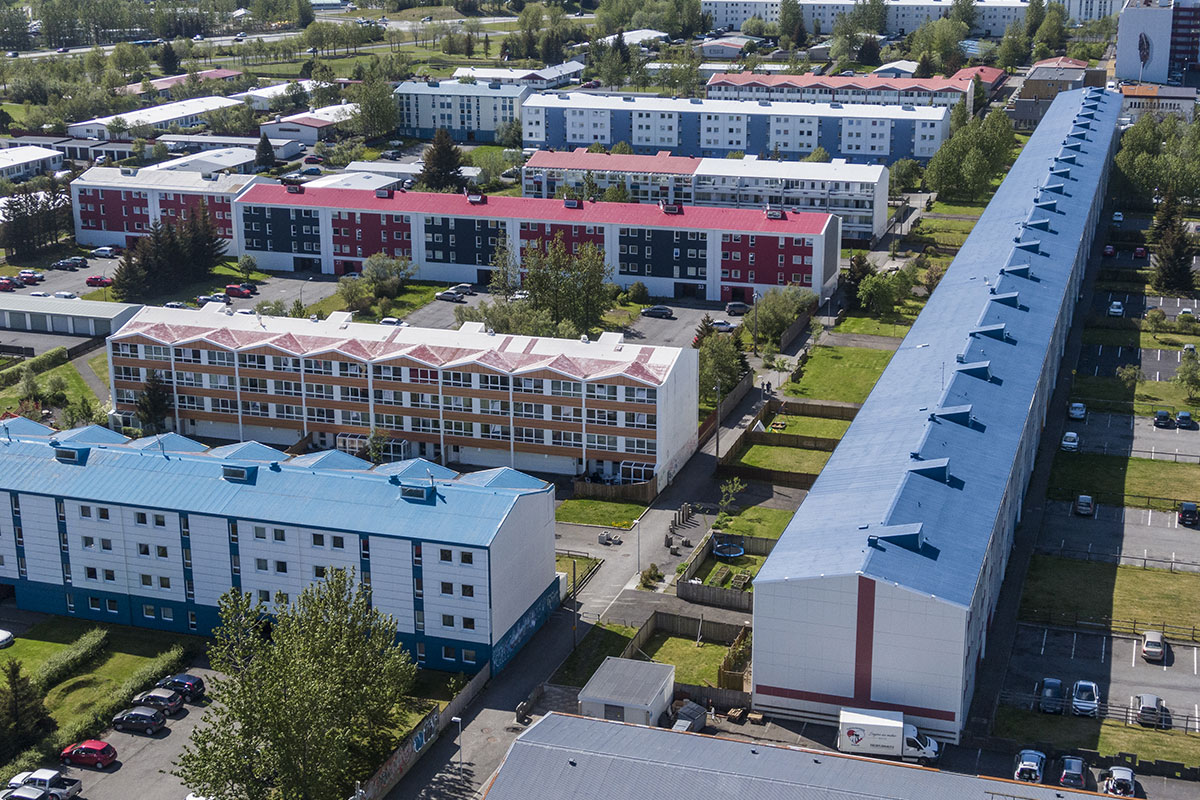
Fellin
The illustration above shows an example of a building-extension on top of an apartment building at Fellin with new flats including elevators in order to improve access. To the right is the current situation in Fellin.
Pictures: Trípólí architects and Bragi Þór Jósefsson.
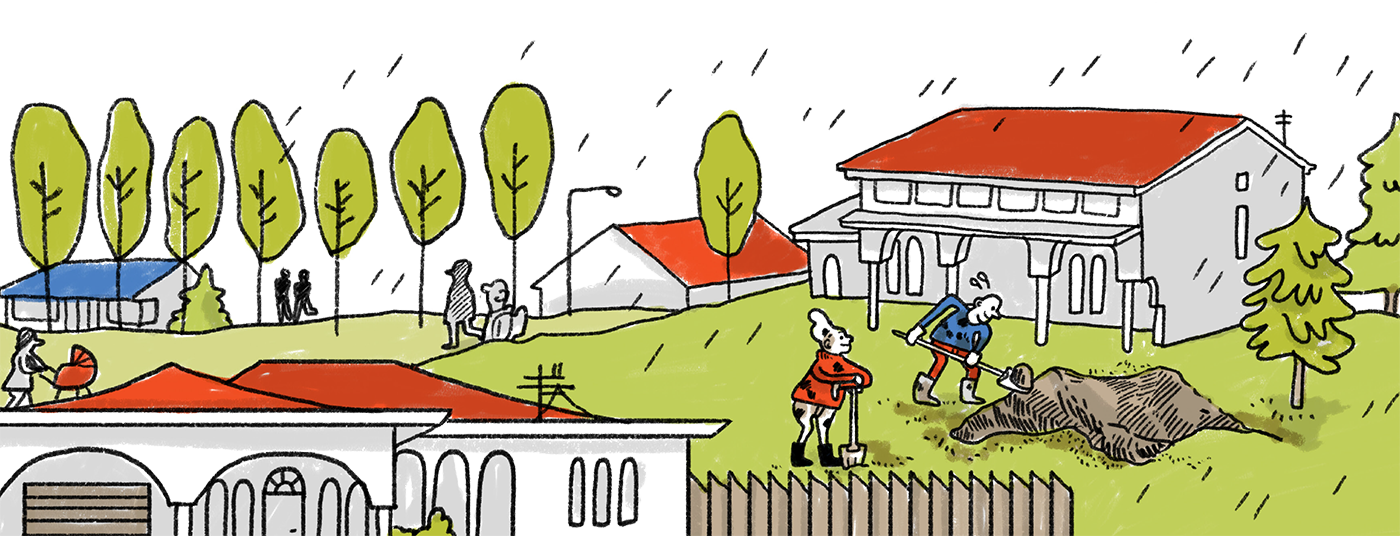
What am I allowed to do with my property?
The neighbourhood plan divides up each area into several conditional units, i.e. groups of houses that are similar in make and appearance. Each conditional unit receives a set of general conditions that take account of common applications from real estate owners during past years regarding amendments, e.g. rooftop sky-light, balcony, extensions, etc.
The general and co-ordinated requirements of the neighbourhood plan make it simple for real estate owners to see which authorisations they have, e.g. to make changes to the property, to furnish an additional flat, or to establish some light commercial activity at home.
The application procedure regarding modest amendments to real estate property should become more simple when costly and time consuming zoning changes and public neighbourhood presentations should mostly be a part of history.
All requirements and rules can be found at Hverfasjá
When the neighbourhood plan has entered into force, real estate property owners can enter their street addresses into the so-called Hverfasjá á Netinu. The terms and conditions for the relevant property in the present neighbourhood plan will then appear, including instructions on how to apply for a permit to make modifications or improvements on the property.
Terms and conditions of the neighbourhood plan are accessible on the internet
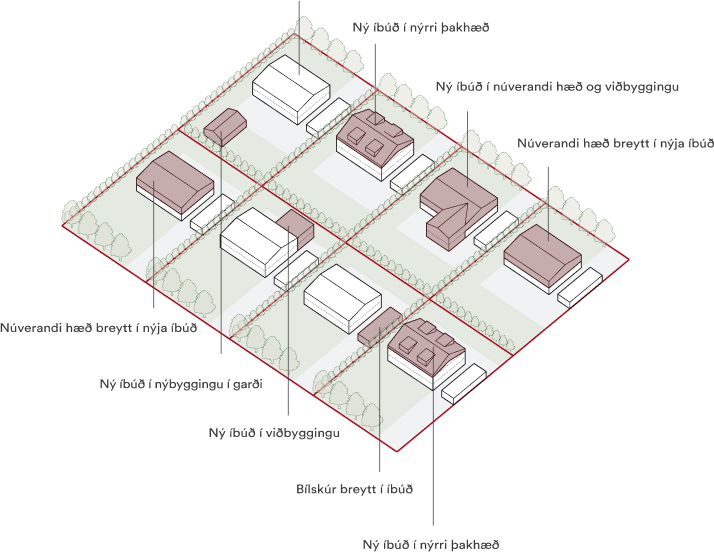
Increasing the number of flats in private houses.
It will be permitted to increase the number of flats in private houses and to have two flats in large private houses where conditions permit, as this will result in better land utilization and can energize human activity in the neighbourhood.
Illustration: Ydda architects.
Possible changes in private houses
The illustration shows how one can build extensions to private houses. New terms and conditions are intended to simplify the procedure for modifications.
Illustration: Trípólí architects.
Single family houses
Most owners of single family houses, terraced houses and duplexes in Breiðholt will be permitted to construct extensions to their houses and modest modifications to their property. They are also a permitting to construct waste sheds and other small structures, up to 15 m² per lot. There are also stipulations regarding the various forms of finishing the lot and its boundaries.
The addition of an extra flat will be permitted in most but not all private houses.
An additional flat may be 50 m² in size, maximum.
Additional flats may be placed inside the present house, in an extension to the house and in some instances in a garage or in a small building on the premises.
Additional flats shall, according to the terms and conditions of the neighbourhood plan, belong to the same assessed property as the main flat and therefore it will not be permitted to sell them.
An additional flat may be rejoined to the main flat if the owners wish.
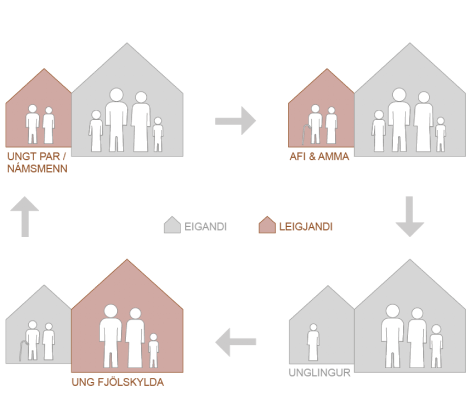
A permission for an additional flat in a private house can allow people to better accommodate their family’s needs when their size and conditions change.
This way some people could continue to reside for longer in their property even though the need for additional rooms is reduced after the children leave home.
An additional flat in the parental house can also be the first step for young people towards independent living.
A permission for an additional flat in a private house can allow people to better accommodate their family’s needs when their size and conditions change
Apartment buildings
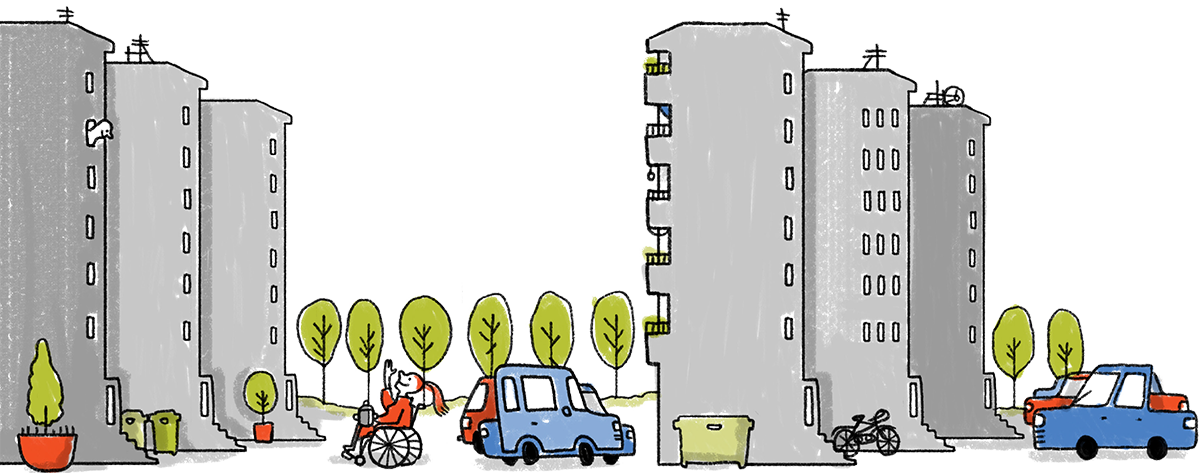
In Reykjavík there are thousands of flats on the upper floors of apartment buildings where there are no elevators. Access to these flats is therefore limited and they are ill-suited for people with reduced mobility or the elderly. For these reasons, many are forced to move out of their flats as they get older or when their situation changes, with the accompanying costs and inconvenience. Rarely have elevators been set up in such buildings in Iceland, even though that is common practice in neighbouring countries. The costs involved in the construction and operation of an elevator is in most cases a major obstacle.
In the neighbourhood plan, housing associations are permitted to build on additional flat on top of many of these apartment houses in Breiðholt where there is no elevator, with the condition that an elevator will be installed at the same time.
New construction rights are valuable and the housing association will be able to allocate them and use the profit to install an elevator at the house and even carry out other maintenance of the building or the premises.
When the working proposals for the neighbourhood plan were introduced and presented in the summer of 2020 many comments and observations were received regarding these ideas, both for and against, but it has been decided to keep these permissions in the neighbourhood plan. Not least because accessibility is important to many groups in society. Improved access to flats on the upper floors can also increase their value and make it possible for many to stay longer in their flats. Last but not least it is a key issue that a permit to build on top of a building is an asset which building lot owners are the sole proprietors of and can only be utilised if there is agreement among them.
In addition to permission for building on top of an existing building, construction plots for extensions have also been defined, and for new buildings on the lots of apartment buildings at Austurberg. The same applies for these as for the right to build on top of an existing building, i.e. that the building right is wholly in the ownership of the proprietors of the lot, and these alone can utilise it if they come to an agreement. These new building permits are intended to improve the street appearance at the urban street Austurberg and at the same time strengthen the area centre and city-sector centre at Hraunberg and Gerðuberg.
Finally, in the area zoning plan, permissions for the construction of waste sheds, bicycle shelters and other small structures, up to 15 m² per lot, are defined, and so are provisions regarding lot finishing´s and boundaries.
Architect contest
In order to attempt to standardise the working methods and work procedures it has
been decided to hold a design contest for construction projects on top of existing
buildings and for improved access, in collaboration with the Association of Icelandic Architects and the Reykjavík Social Housing.
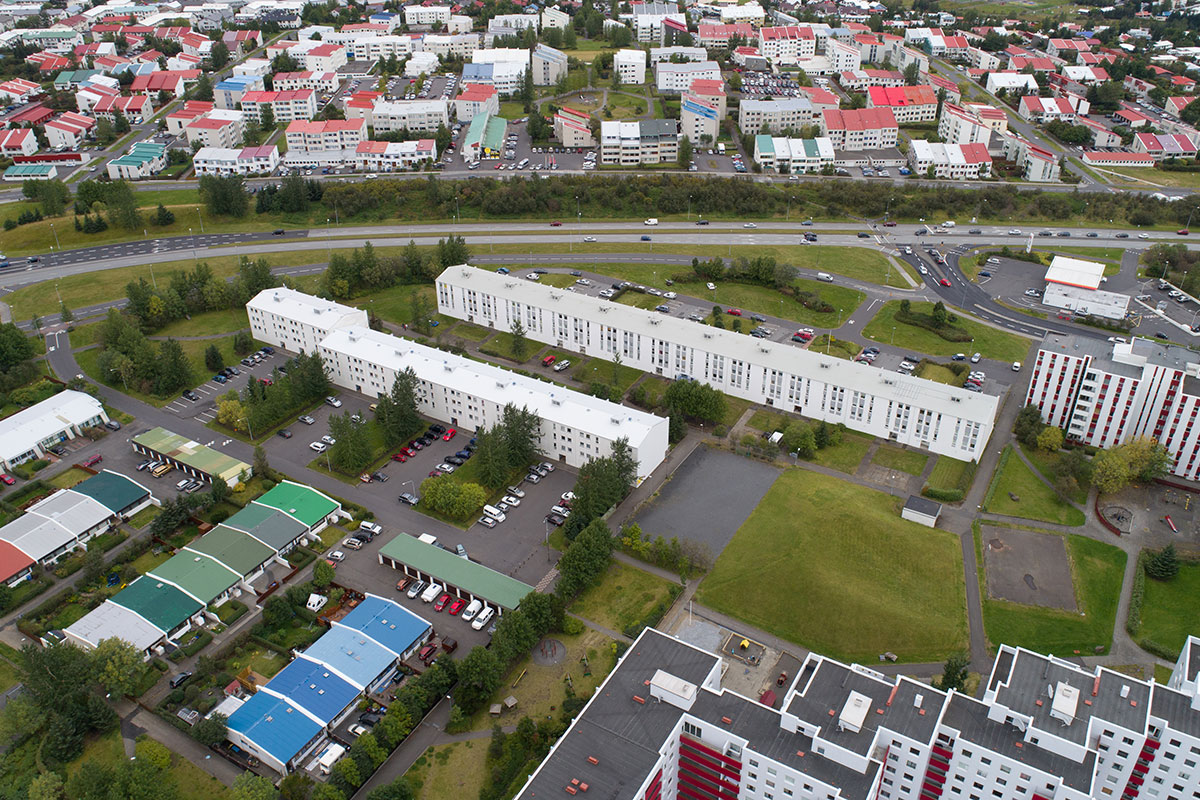
Apartment buildings without elevators, managed by the Reykjavík Social Housing, are i.a. Yrsufell 5-15 in Upper-Breiðholt, but it is expected that the results of the design contest
can be used in all established areas of the city.
Access to flats can be
improved by adding elevators
to older apartment buildings,
which will increase their value
and make it possible for many
to stay longer in their flats
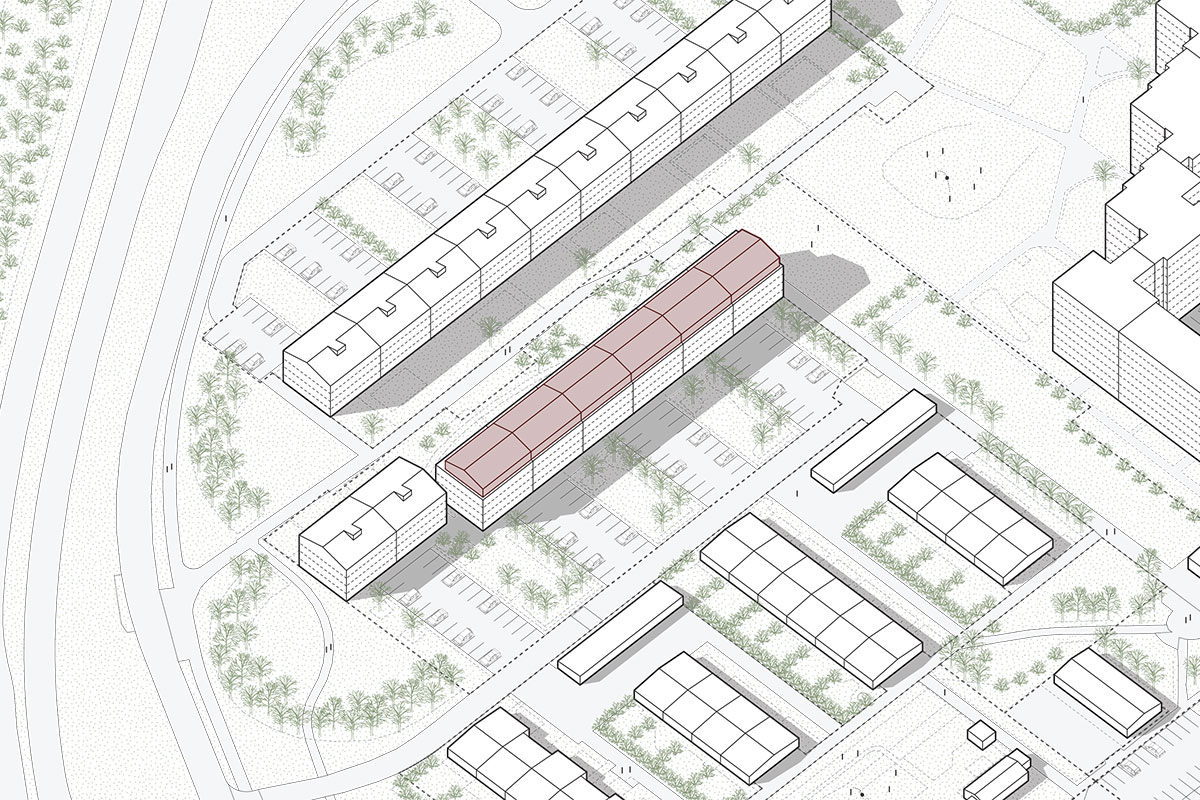
Apartment buildings without elevators
Yrsufell 5-15 is an examle of an apartment building in Upper-Breiðholt owned by the Reykjavík Social Housing.
Pictures: Trípólí architects and City of Reykjavík.
.
Commercial activity
in residential areas
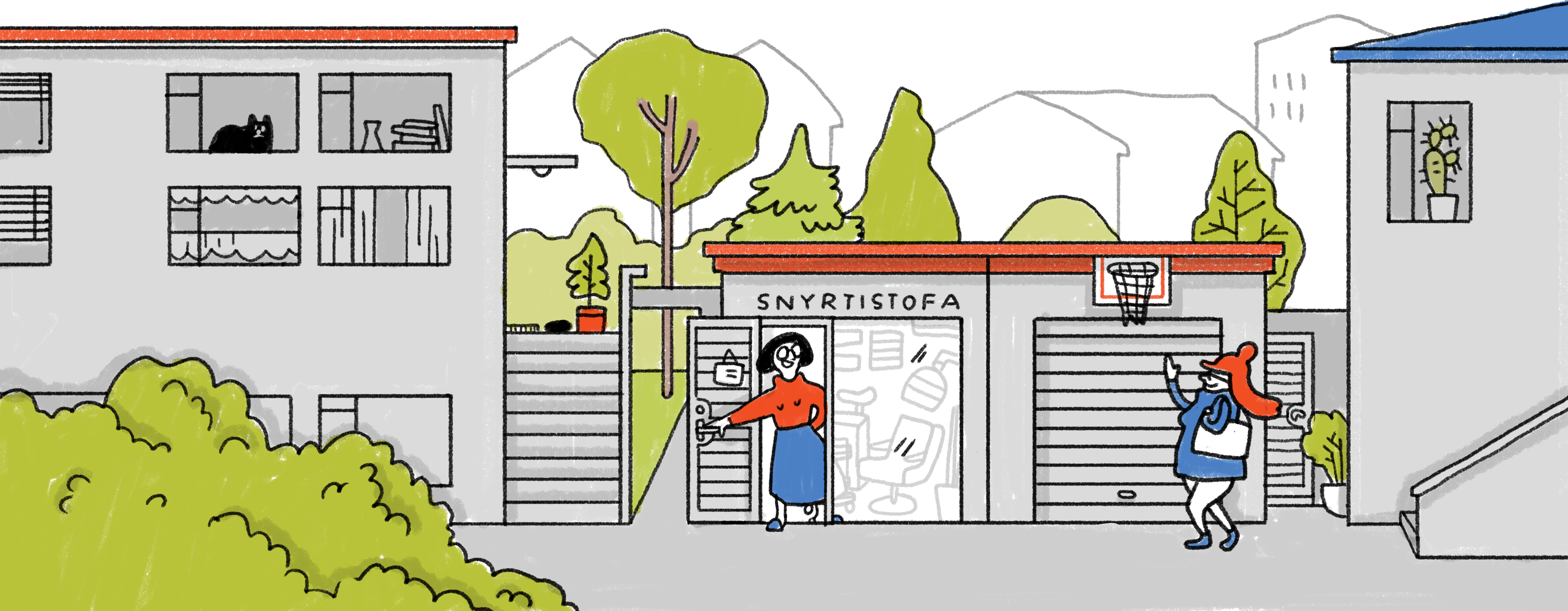
Commercial activity in residential areas is not a new phenomenon.
Many enterprises have been created in living rooms, basements or garages of entrepreneurs who have got a splendid idea and who have used their homes to develop their first start-up companies.
The terms and conditions for the neighbourhood plan provide that a variety of activity within the residential housing area in all areas of Breiðholt are permitted.
This is considered to advance a more efficient use of infrastructure and more sustainable areas with more diverse services at a walking distance.
Such activities are also considered to enhance human activities, increase the number of pedestrians and cyclists, provide more employment opportunities and enhance innovation.
Polluting activities which call for an operating licence from the Environmental Agency or the health committee are, however, not permitted.
This applies equally to activities in commercial and residential buildings.
At certain defined commercial and service areas and in central areas within the neighbourhoods, there are more extensive permits for commercial activity.
Permitting commercial activity within housing areas enhances human activity, increases employment opportunities and encourages innovation
City area protection
The act on zoning plans provides for the authority to enter into the zoning plan a provision concerning protection of city areas, if there is considered a need to protect the peculiarities of older living areas or other cultural and historic relics because of their cultural and/or historical value, without there being a formal protection decree.
Three areas in Breiðholt get so-called city area protection of the class – yellow, in the area zoning plan, for the combination of houses and unity.
In Lower-Breiðholt it is proposed that the U-apartment blocks within Arnarbakki will come under city area protection.
In Upper-Breiðholt the Emergency Fund Houses at Keilufell come under city area protection and so do the houses on Fálkhóll in Seljahverfi (Seljabraut and Bakka-, Brekku-, Dal-, Engja-, Fífu-, Fjarða-, Fljóta- and Flúðasel).
This is not a formal protection of buildings but rather the protection of the peculiarities of older housing areas, which limits to a great degree the issuing of permits for the construction of extensions and changes made on the relevant houses.
Thus it is not permitted to build on top of the apartment buildings in Lower-Breiðholt which receive city area protection and there will not be issued new permits in the area zoning plan for the construction of extensions in the housing area at Fálkahóll and in Keilufell.
Three areas in Breiðholt receive city area protection for the combination of houses and unity which limits to a great degree permits for the construction of extensions and amendments to the houses